Enjoying NH’s State Parks and Public Lands
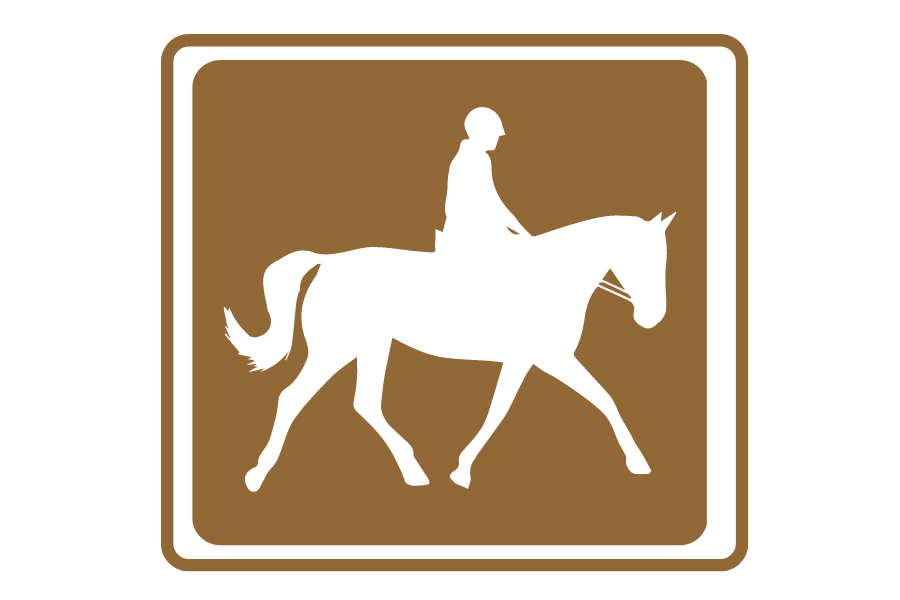
Please check the NH State Park and Rail Trail Coalition pages for the horseback riding symbol to ensure that the trail you are going on allows horses.
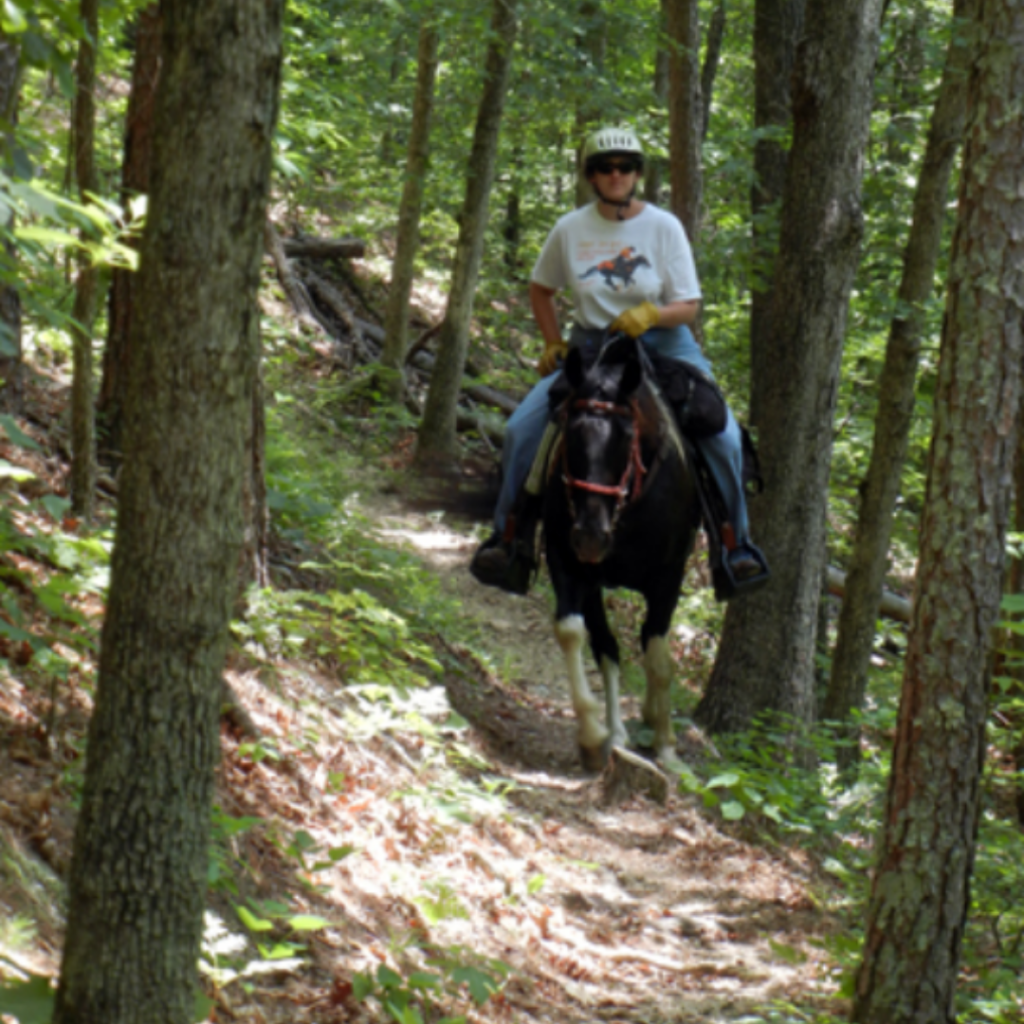
NHHC promotes trail etiquette and encourages all trail users to be respectful of each other’s presence, safety, and enjoyment. Please take a moment to review the information provided by NH State Parks.
Is your horse ready for trails?
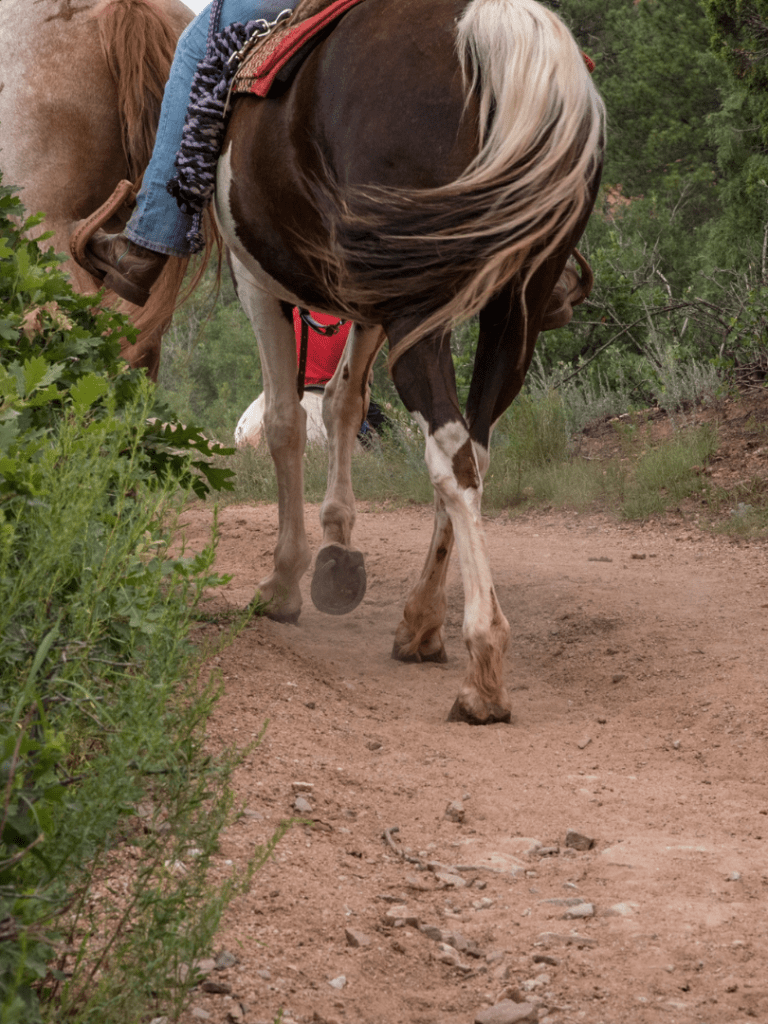
- Make sure your horse has the temperament and training for riding on recreational trails.
- Know you and your horse’s limitations.
- Let other trail users know when it is safe to pass your horse.
- Announce your intention to pass others. Come to a walk and pass on the left when safe and appropriate.
- Always pick up after your horse. Keep the trail head and parking area clear of manure and trash.
- When meeting a musher, move off the trail to a safe spot and let them keep moving to pass. Call out to the musher if they need to stop.
Checklist provided by NH State Parks
Hampton Beach
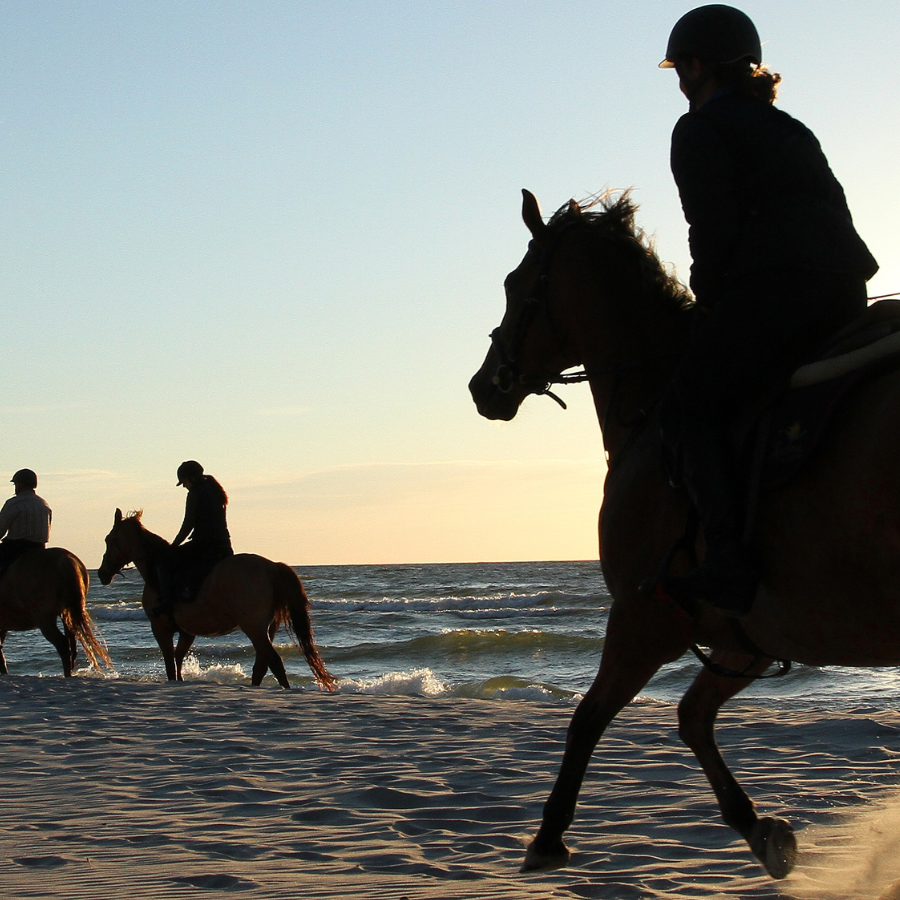
One of everyone’s favorite things to do is go riding on the beach! But if we want to ensure that equestrians are continued to allow access to New Hampshire’s limited coastline, not only do we need to be Equestrian Good Stewards ourselves, we need to ensure all users know the rules. The NHHC encourages all equestrian beach users to display the NHHC Equestrian Good Steward Beach Placard on their tow vehicle (free download below).
Horseback riding is permitted on Hampton Beach (from Hampton Beach South to Boar’s Head) from October 1 – April 30. No other NH beaches allow equine access.
Horse trailer parking is allowed at the Hampton Beach South parking lot ONLY.
Please keep the parking area, path to the beach, and all other areas above high tide line clean of manure, hay, and bedding. If you find “deposits” left by other equestrian users, please be a good steward and clean it up on their behalf.
Res 7300 Admin. Rule: Owners shall clean up and remove offsite within a reasonable time but prior to leaving the site all waste eliminated by their equine or other utility animal from public traffic areas and areas where the public congregates. These areas are defined as paved sidewalks and walkways, maintained play areas and athletic fields, lawns and fields maintained by regular mowing and associated with a developed recreation area, campsites, fresh water beaches, areas above the high tide mark at Hampton Beach, improved features such as picnic areas, staging and gathering areas, and parking lots and trail heads. Disposal of stall waste, hay or manure shall not be permitted on DRED properties.
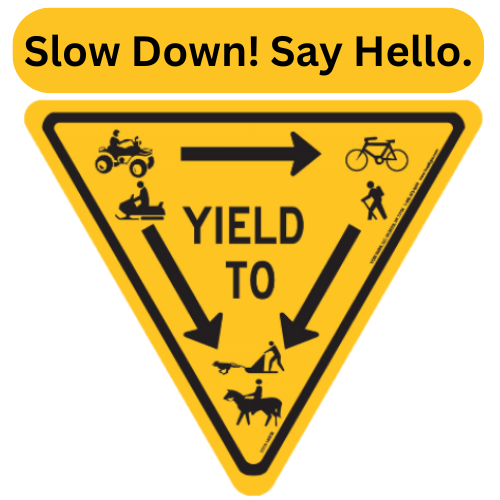
The Safe Passing Program’s “Slow Down, Say Hello Campaign”
The Safe Passing Program aims to instruct trail users on proper yielding etiquette by addressing the common issues of speed and silence, which often lead to safety concerns for equestrians, dog walkers, and others on trail.
The core message of “Slow Down, Say Hello” — whether by a hi, a wave, a nod, or a smile — encourages users to reduce speed or stop to acknowledge each other for the safety of all. By encouraging users to slow down and take the time to greet each other, we hope to foster a friendlier and safer trail environment for everyone.
To maximize the Safe Passing Program’s impact, NHHC has created a reminder card (free download below) for use on trail kiosks, websites, and in other educational and outreach materials. We encourage equestrians to ask trail managers to share the reminder card with trail users in whatever means or method they see fit.

Division of Parks and Recreation’s Rules for Equine: Res 7301.09
Please take the time to familiarize yourself with the Division of Parks and Recreation’s Rules for Equine: Res 7301.09 in order to ensure a pleasant and safe experience for all visitors.
Passing a Horse Safely Videos
 New Hampshire Horse Council